Spanish · 5 years on Samui
Spanish cycling enthusiast and eco-travel advocate on Koh Samui for 5 years. Carlos covers all bicycle and e-scooter content with a focus on sustainable exploration.
Updated: May 2026
Last March I rode the Super Soco CPx and Yadea G5 Pro on consecutive mornings - the same 38-kilometre north coast circuit, same departure time, same rider. The CPx averaged 55 km/h and used 46 per cent battery. The G5 Pro averaged 50 km/h and used 44 per cent battery. The CPx reached 70 km/h on the ring road straight; the G5 Pro reached 60 km/h. The G5 Pro returned slightly more battery remaining on a matched circuit. The CPx was faster. Both completed the route without range concern.
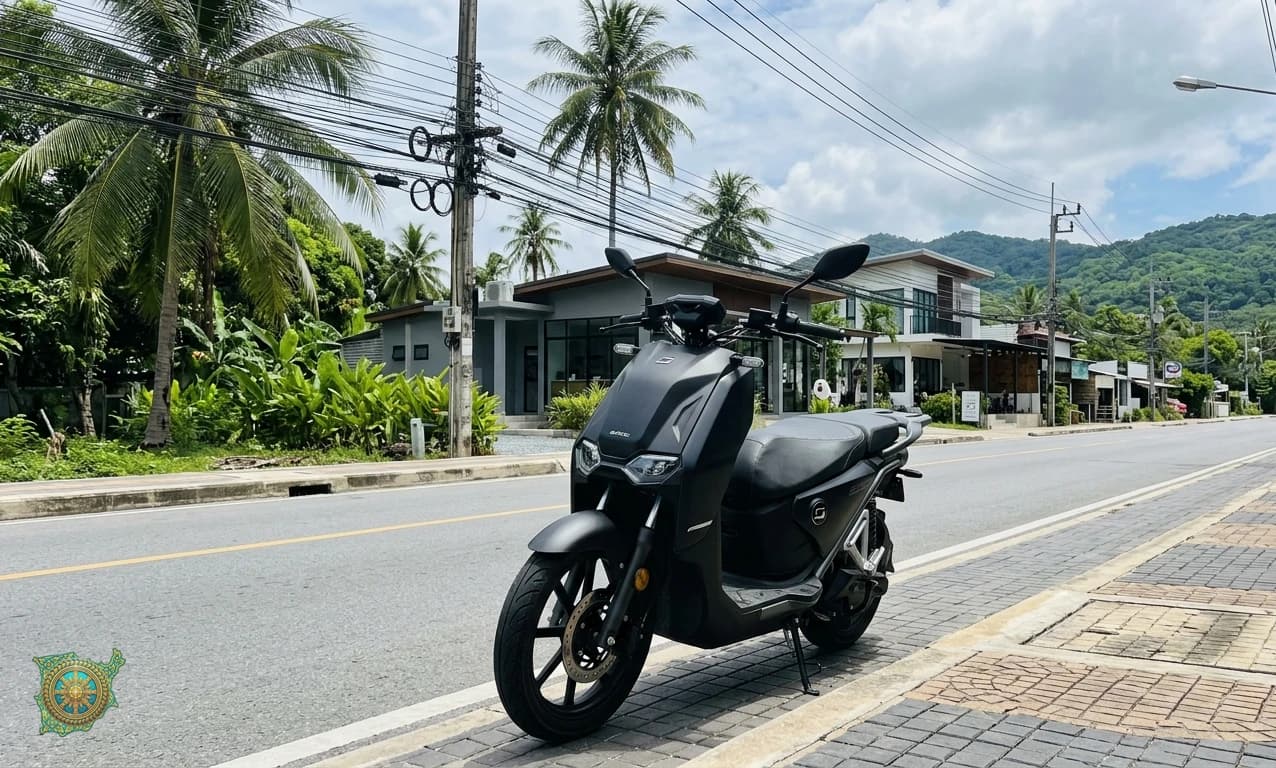
On the Chaweng ring road straight last January I measured: CPx at 70 km/h, G5 Pro at 60 km/h. The 10 km/h difference is meaningful on open ring road sections where car traffic moves at 65 to 70 km/h. The G5 Pro manages ring road traffic but requires riders to accept being the slowest vehicle on the road on clear straights. For riders whose routes include ring road sections above 60 km/h, the CPx is the more capable e-scooter. For beach corridor riding below 50 km/h, both scooters operate identically.
Measuring consumption on matched flat-road routes at 42 km/h last February: G5 Pro at 1.10 per cent per kilometre, CPx at 1.15 per cent per kilometre. The G5 Pro's 5 per cent efficiency advantage translates to approximately 4 kilometres of additional range at rated capacity - the difference between 68 and 72 kilometres. For beach corridor riders below 50 kilometres per day, this difference is irrelevant. For ring road circuits approaching 65 kilometres, the G5 Pro's marginal range advantage provides a slightly larger buffer at the end of the day.
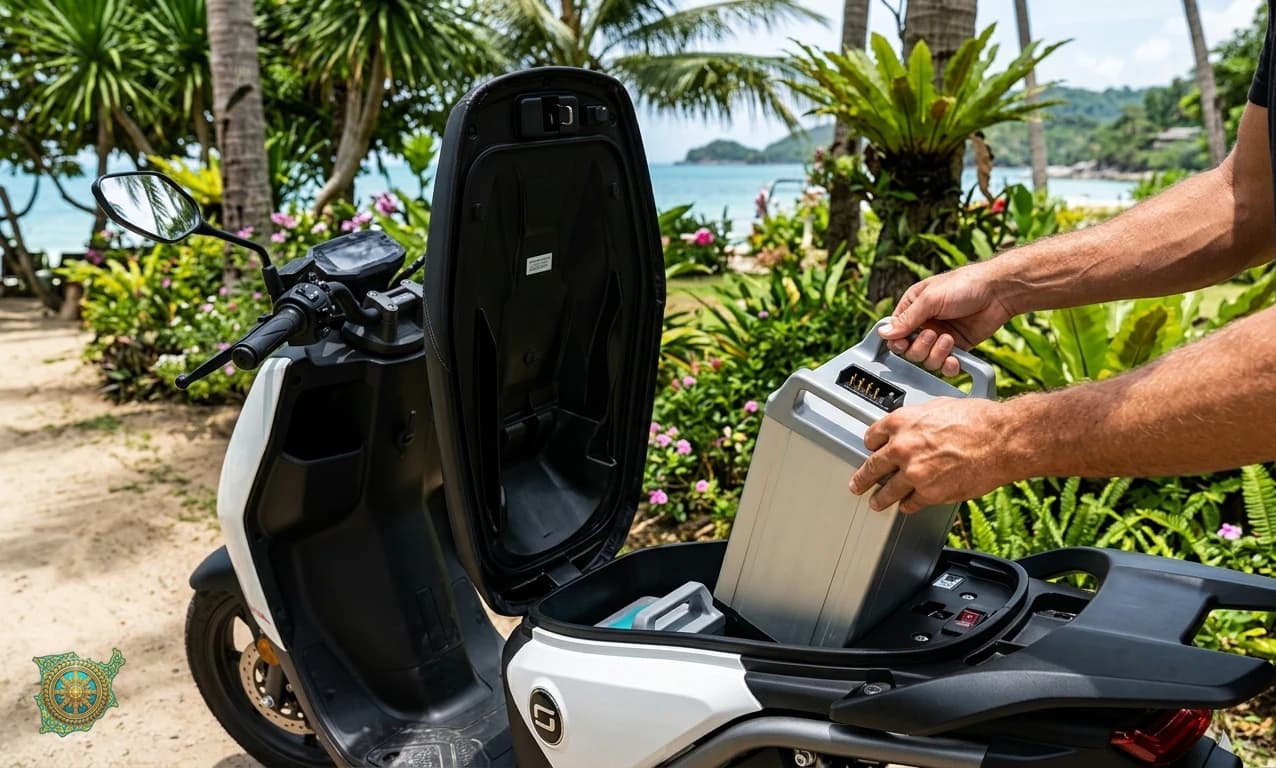
The G5 Pro has no battery swap option. It charges via a fixed onboard charger requiring a 220V socket and approximately 5 hours for a full charge from empty. The CPx's swappable battery can be exchanged at partner outlets in under 5 minutes, effectively resetting range at a stop point without a charging wait. For a rider planning a 90-plus-kilometre day on Samui - beyond either scooter's practical single-charge range - only the CPx provides a route-extending solution that does not require a 90-minute minimum café stop.
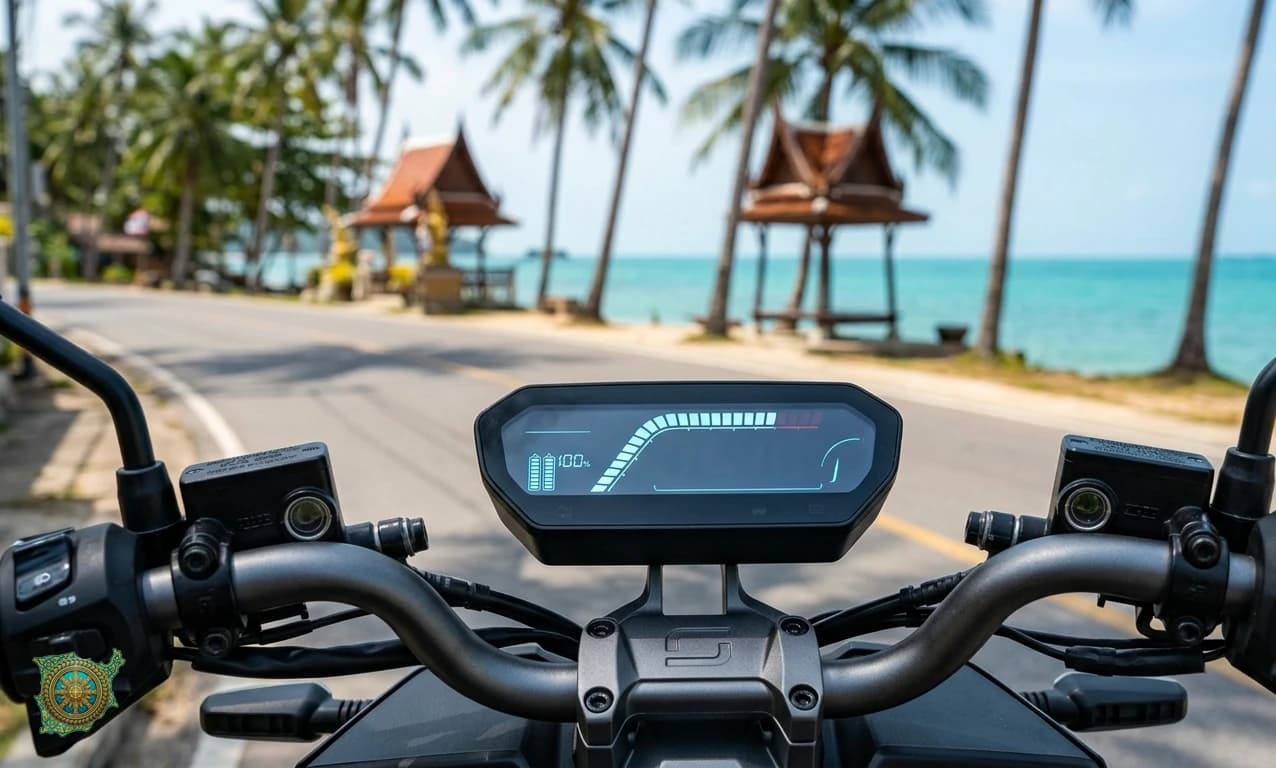
Parking the G5 Pro outside the Lamai beach market last November, I used the companion app to check battery level and lock status remotely. The CPx has no app - a conventional gauge and no GPS tracking. On Samui's busy beach strips, the G5 Pro's app anti-theft alert and remote lock is functionally valuable in a way the CPx cannot match. On suspension, the G5 Pro's larger 14-inch wheels and longer wheelbase produced slightly smoother absorption on the concrete road joins north of the Fisherman's Village. Both are competent; the G5 Pro is more refined.
Five years of comparing the Super Soco CPx and Yadea G5 Pro on Koh Samui routes has produced a consistent decision framework: choose the CPx if ring road speed above 60 km/h matters or if battery swap capability is a route-planning asset. Choose the G5 Pro if app connectivity, anti-theft GPS tracking, and slightly smoother ride quality are daily priorities. For pure beach corridor riding between 30 and 50 kilometres per day, both scooters deliver the same practical outcome. The choosing criterion is whether you want the fastest e-scooter on the island or the smartest one.
Interested in renting Super Soco CPx?
Check live availability and pricing for the Super Soco CPx on Koh Samui.
Show availableFirst-hand Super Soco CPx guides from our local team - where to ride it, when, and how to get the most from it on Koh Samui.

Browse the fleet, check availability, and contact us directly from your phone. Free on iOS and Android.
First-hand road and trail guides written by our local team - where to go, when to ride, and what to watch out for.