
Spanish · 5 years on Samui
Spanish cycling enthusiast and eco-travel advocate on Koh Samui for 5 years. Carlos covers all bicycle and e-scooter content with a focus on sustainable exploration.
Updated: May 2026
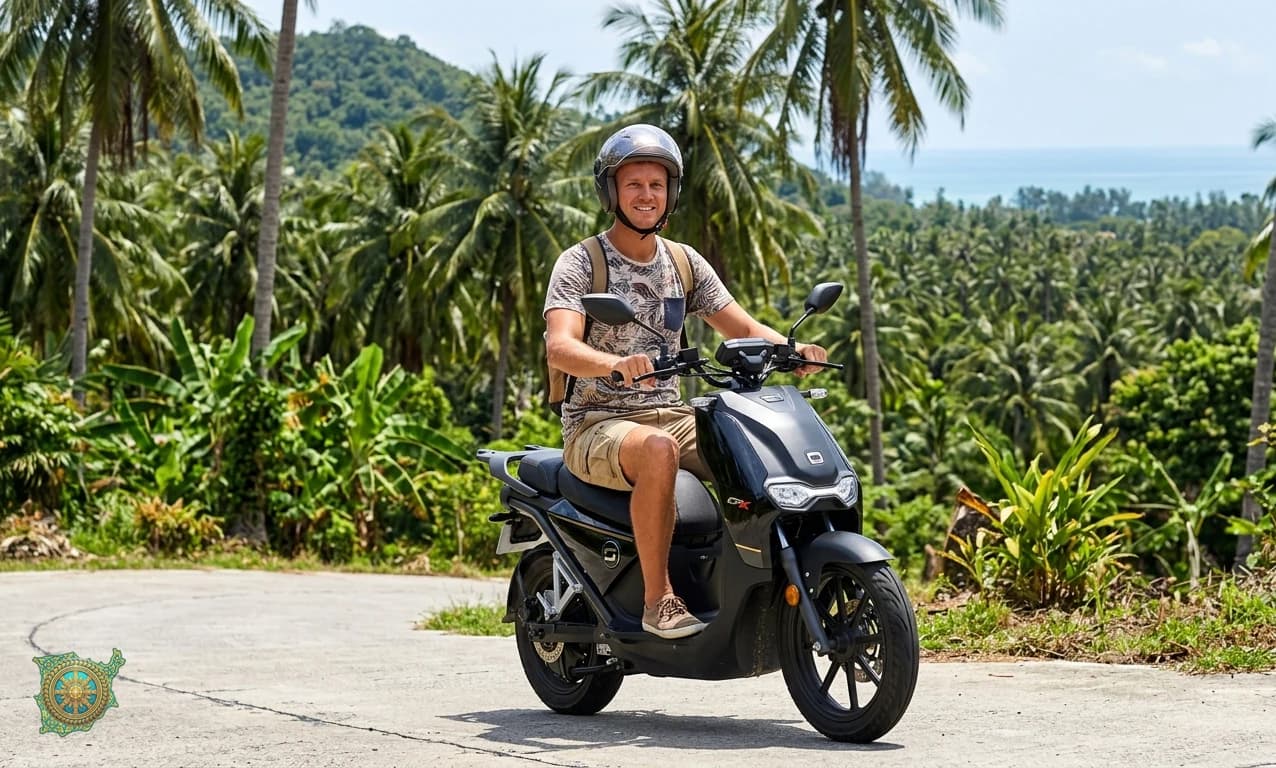
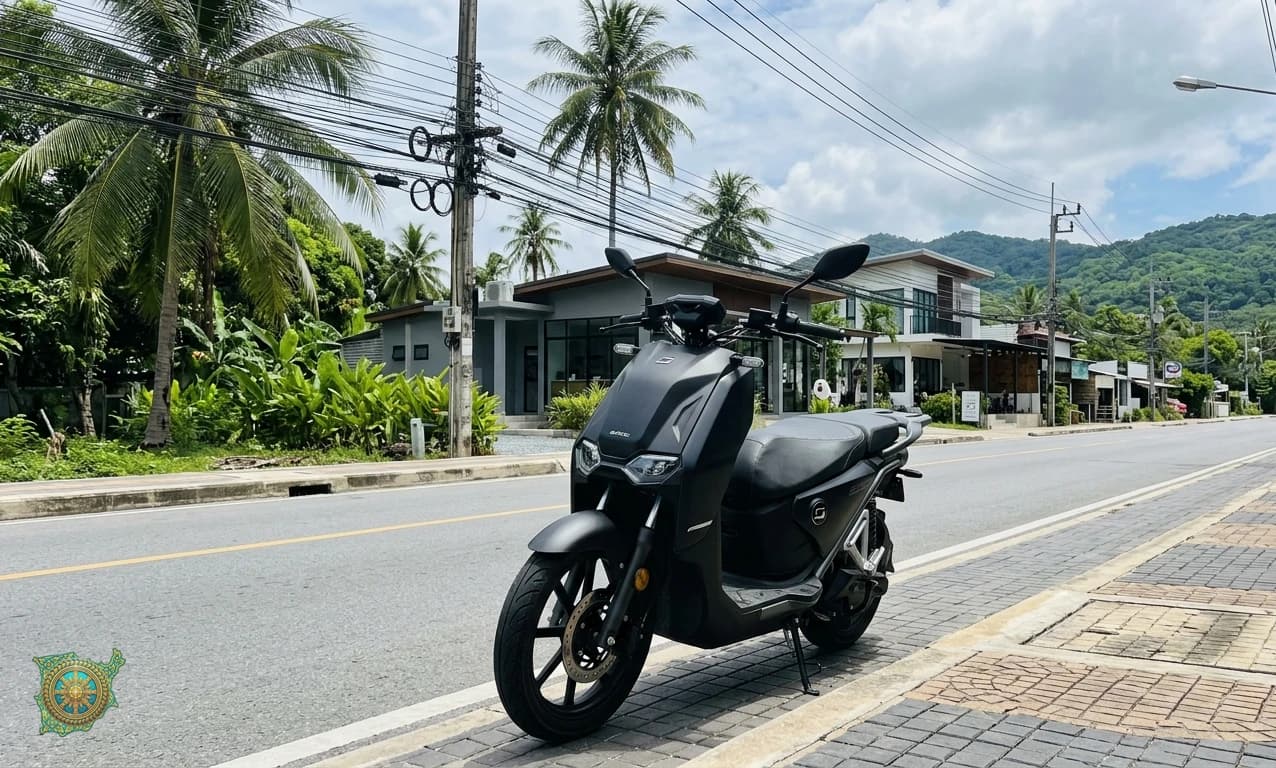
On the Chaweng ring road at 6 a.m. last January - empty straight, dry tarmac - I held the Super Soco CPx at its measured ceiling of 70 km/h for 1.5 kilometres. The motor ran smoothly at that pace; the CPx's larger 14-inch wheels gave it more stability than the NIU MQi+ Sport's 12-inch units at the same speed. At 70 km/h the CPx keeps pace with car traffic on Samui's main ring road sections. No other standard-rental e-scooter on the island reaches that speed.
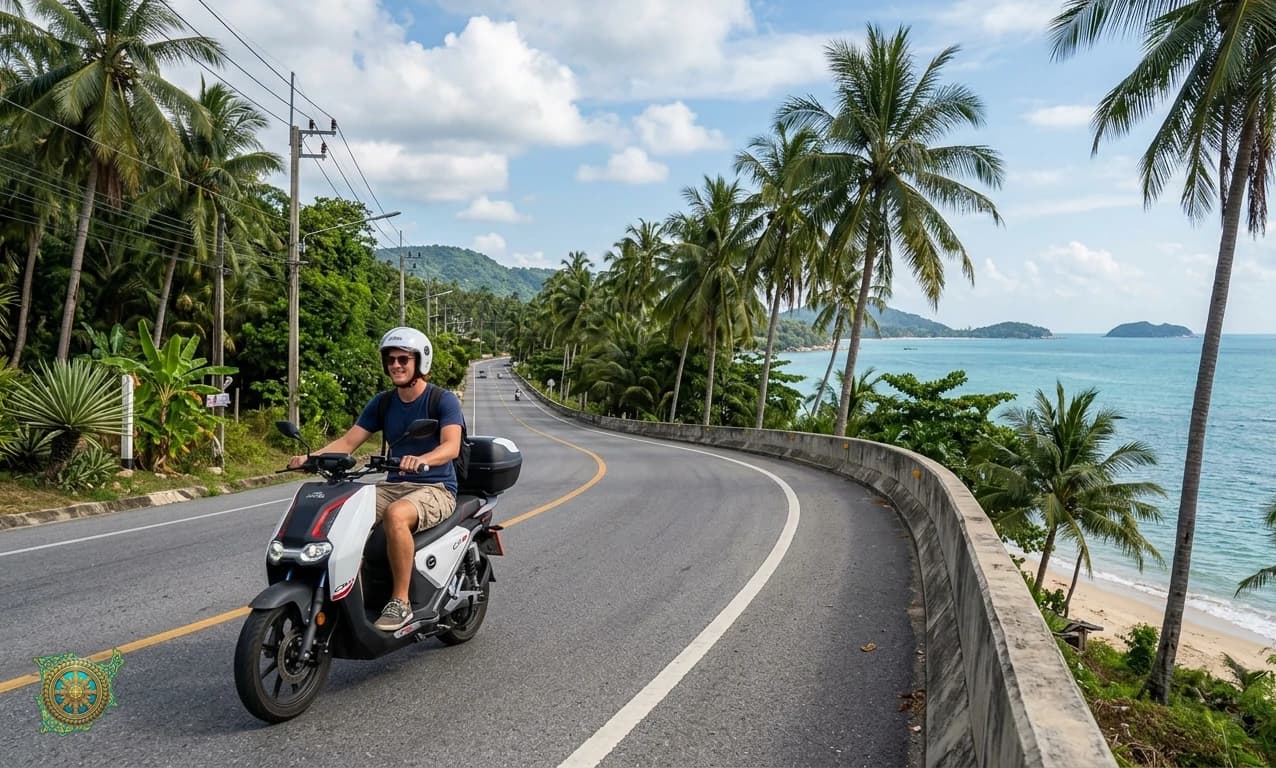
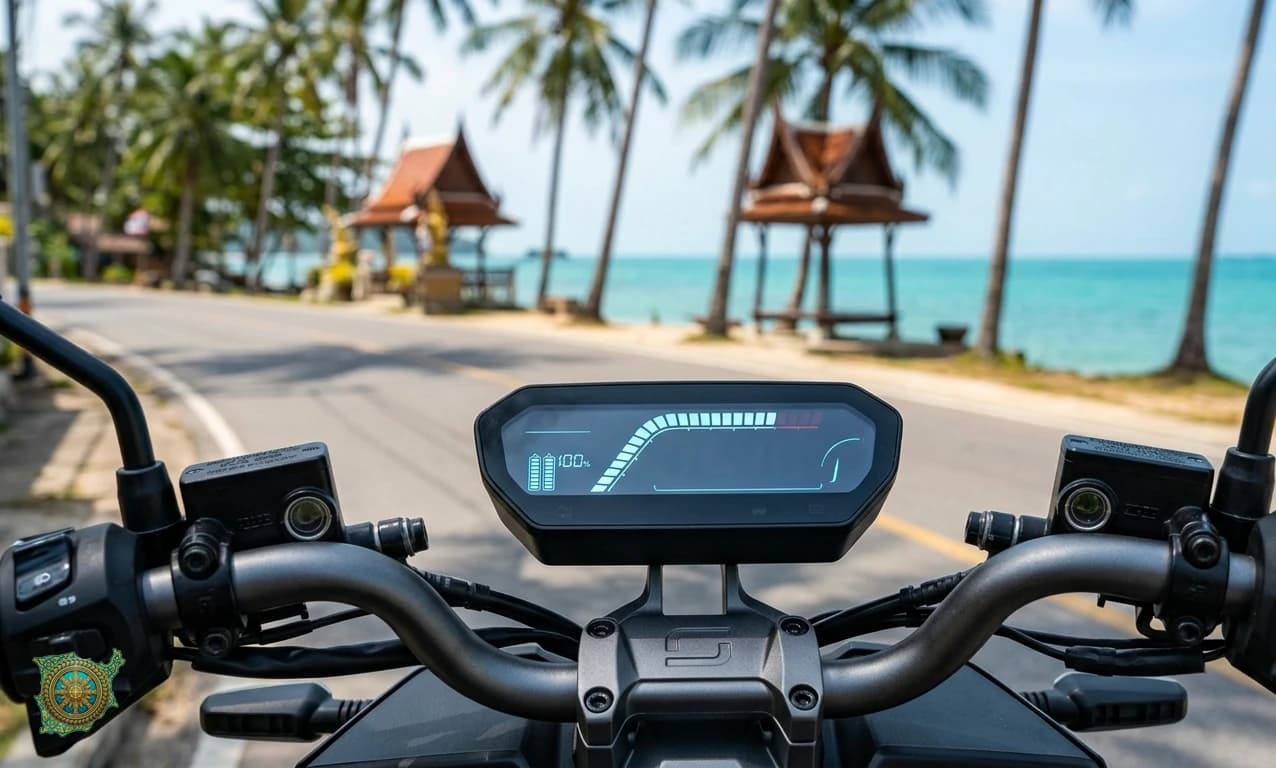
Measuring consumption per kilometre on the coastal flat from Chaweng to Mae Nam last February - 20 kilometres, average speed 42 km/h - I recorded 1.15 per cent battery per kilometre on the CPx. At rated capacity, that projects to approximately 87 kilometres of range. Real-world range, accounting for acceleration, gradient variation, and speed above 42 km/h, lands at 65 to 70 kilometres per charge. Riding mixed roads at 55 km/h average, I completed 61 kilometres last November with 9 per cent remaining.
Riding the CPx from Chaweng to Nathon last October - 22 kilometres, averaging 60 km/h on the ring road straight - I used 34 per cent battery. The same route the following morning at 45 km/h average used 28 per cent. Speed has a measurable range cost on the CPx: the 15 km/h speed reduction saved 6 per cent of battery over 22 kilometres. For riders planning full-island ring road circuits above 60 km/h, the 65-kilometre practical range is the relevant number, not the 70-kilometre optimistic figure.
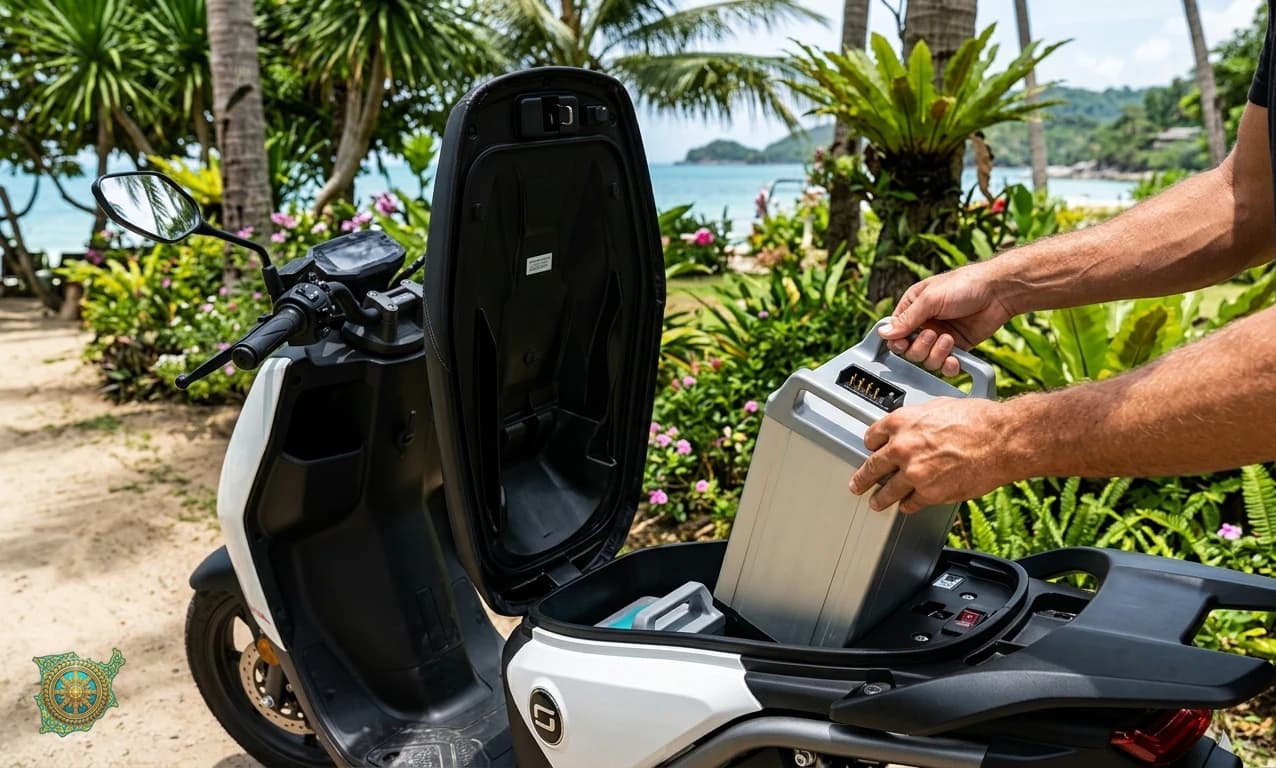
At the Mae Nam guesthouse last March I plugged the CPx in at 12 per cent battery on the standard 220V socket provided. After 90 minutes it showed 52 per cent - a 40-percentage-point recovery in 90 minutes. Full charge from below 10 per cent took approximately 4 hours 30 minutes. The CPx charges slightly faster than the Yadea G5 Pro (approximately 5 hours from low) and slightly slower than the NIU MQi+ Sport (approximately 5 hours, but recovers faster in the first 90-minute window).
Climbing the coastal hill above the Choeng Mon turnoff last February on the CPx - approximately 4 per cent gradient, 1.8 kilometres - I used 8 per cent battery for that single hill. The same section on the descent recovered 2 per cent through regenerative braking, for a net cost of 6 per cent. On Samui's typical coastal roads the hills are short and the net gradient impact is manageable within a 65-kilometre total range. The mountain road climbs above Nathon are the only sections where battery use becomes a planning concern.
Five years of riding the Super Soco CPx on Koh Samui's roads has produced consistent performance figures: 70 km/h top speed on open ring road, 65 kilometres practical range at mixed speed, 1.15 per cent per kilometre on flat coastal tarmac. These numbers have been stable across multiple rental units over multiple years. For a tourist planning Samui circuits below 55 kilometres at average speeds below 55 km/h, the CPx's range is a non-issue. For circuits approaching 65 kilometres at ring road speeds, a midday charge stop is the conservative choice.
Interested in renting Super Soco CPx?
Check live availability and pricing for the Super Soco CPx on Koh Samui.
Show availableFirst-hand Super Soco CPx guides from our local team - where to ride it, when, and how to get the most from it on Koh Samui.

Browse the fleet, check availability, and contact us directly from your phone. Free on iOS and Android.
First-hand road and trail guides written by our local team - where to go, when to ride, and what to watch out for.