
Spanish · 5 years on Samui
Spanish cycling enthusiast and eco-travel advocate on Koh Samui for 5 years. Carlos covers all bicycle and e-scooter content with a focus on sustainable exploration.
Updated: May 2026
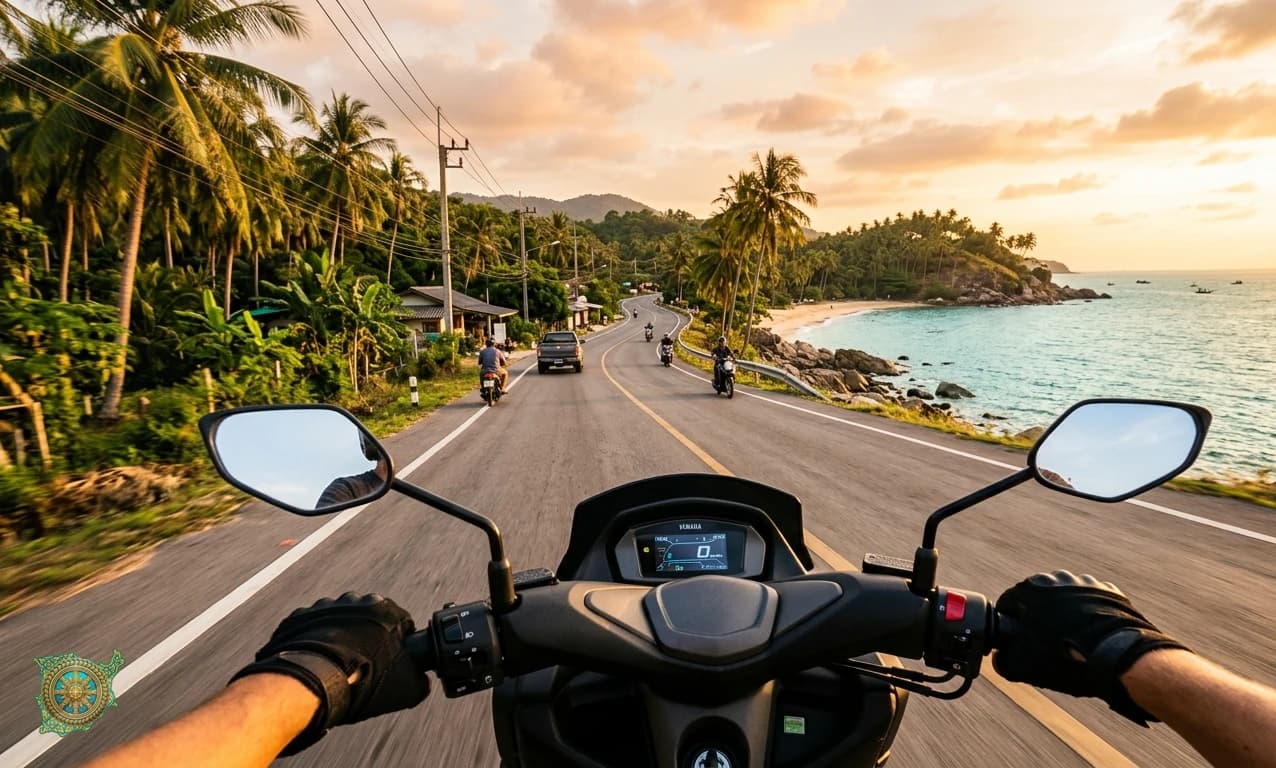
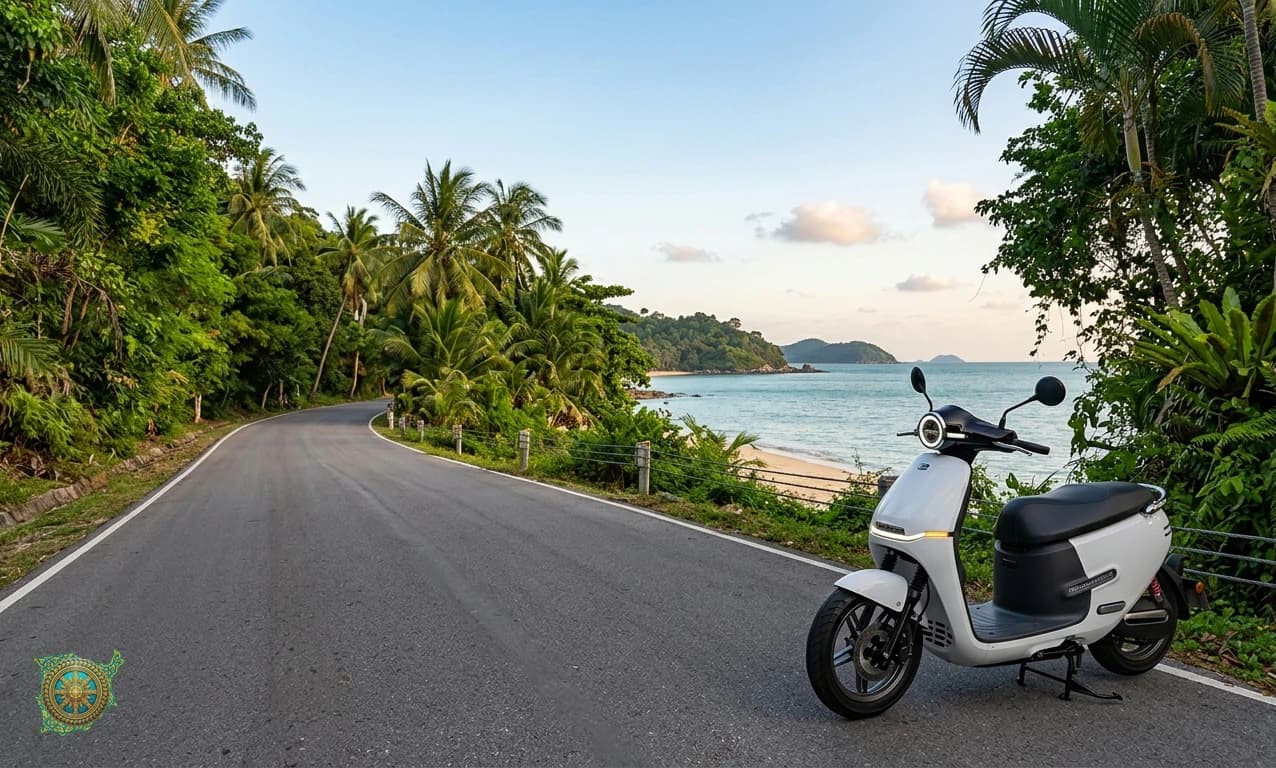
On the coastal road above the Ban Tai reef zone last February, I rode the EK3 past a snorkel group assembling at the beach access track - eight people carrying gear toward the water 40 metres from the road. On a petrol scooter I would have passed them with exhaust fumes drifting toward the water. On the EK3 I passed silently, emitting nothing. The reef zones on Samui's north coast run close to the coastal road in several sections. Riding an electric scooter in those sections is not symbolic - it is a measurable, direct reduction in hydrocarbon proximity to marine habitat.
Over seven days of riding last October I covered 312 kilometres on the EK3. A Honda Click 125 covering the same distance would have consumed approximately 4.4 litres of petrol - emitting approximately 10.3 kilograms of CO2. The EK3's electricity consumption over those 312 kilometres, at Thailand's grid emission factor, produces approximately 2.8 kilograms of CO2 equivalent. The EK3's seven-day carbon saving over an equivalent petrol scooter: approximately 7.5 kilograms. That is a transparent, calculable figure - not a marketing claim.
Parking at the Ang Thong Marine Park ferry terminal last November while using the EK3 for the Nathon waterfront circuit, I noticed the ferry departure area's air quality - dozens of petrol scooters idling, the pier filled with exhaust. The EK3 sat off, contributed nothing. On Samui's eco-resort corridor - the north coast from Mae Nam to Bophut - the concentration of environmentally positioned accommodation creates a context where arriving on a zero-emission scooter is not only consistent with the surroundings but quietly noted by staff and guests.
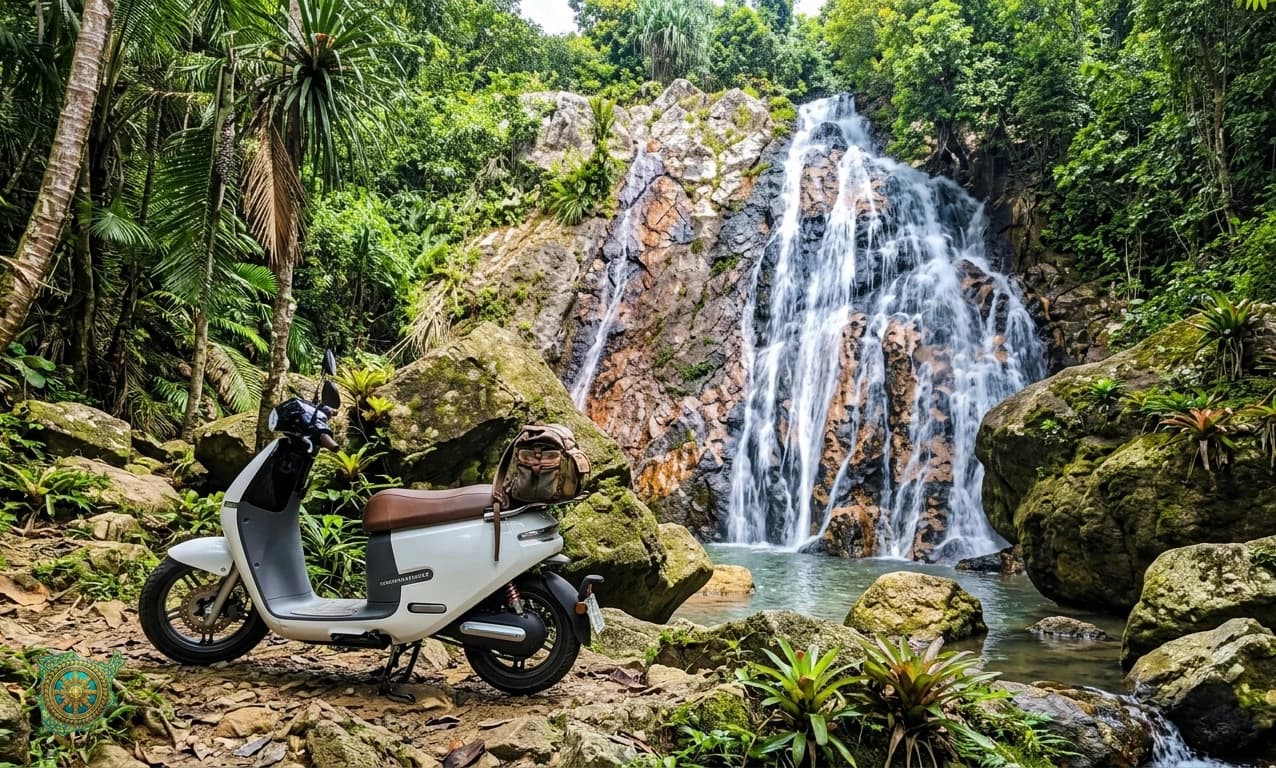
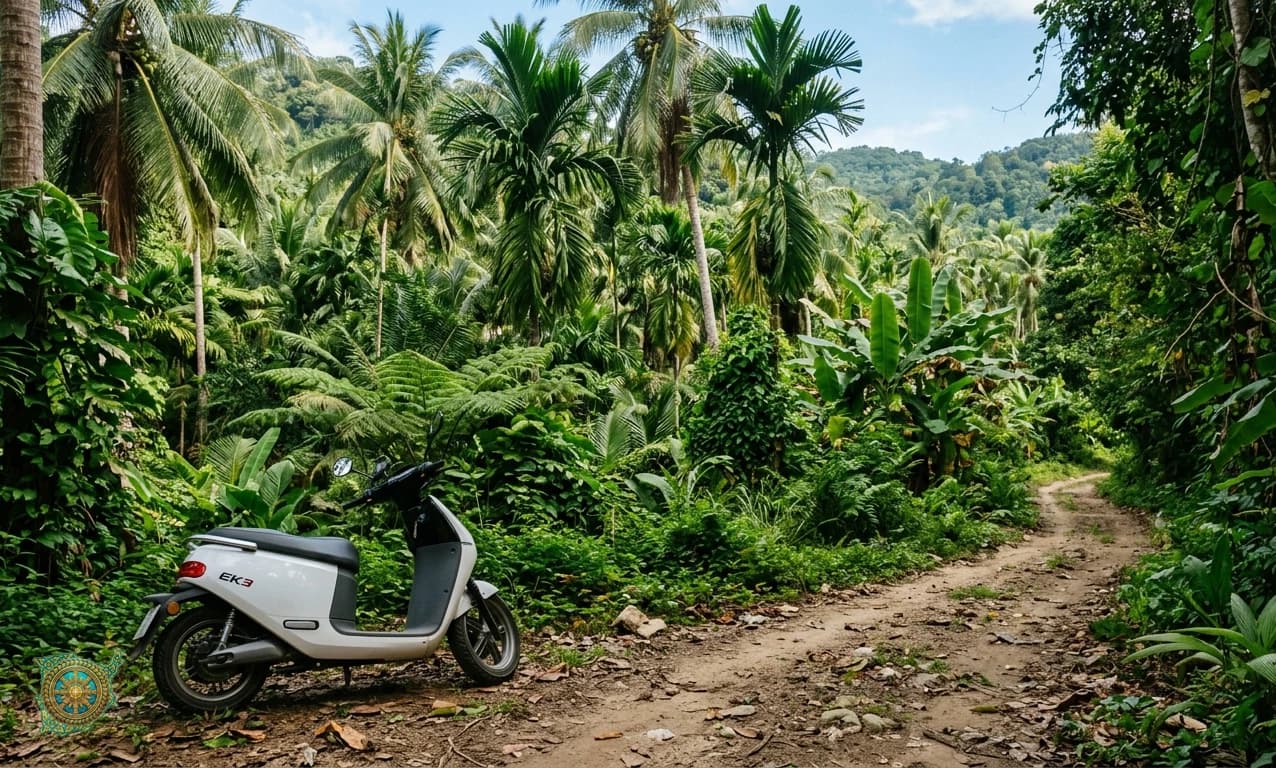
At the Samui Elephant Sanctuary approach road last January, I rode the EK3 to the entry gate - a forest track where animal welfare requires low noise levels near the sanctuary perimeter. The EK3's electric motor produced approximately 42 decibels at 30 km/h - equivalent to a quiet conversation. A petrol scooter at the same speed produces approximately 75 decibels. For a tourist visiting wildlife areas, sanctuaries, or nature reserves near Samui's interior, the EK3's low noise output has genuine welfare relevance beyond its environmental credential.
Completing the north coast circuit last October on the EK3 - Chaweng to Mae Nam, Fisherman's Village, Big Buddha, back to Chaweng - I noted every reef-adjacent road section: three stretches on the north coast where the road runs within 50 metres of nearshore coral habitat. Five years of riding those sections on petrol scooters and on the EK3 has made the difference tangible to me. The EK3 does not solve ocean tourism's environmental impact wholesale, but it removes the most direct, immediate source of pollution from those specific sections - exhaust.
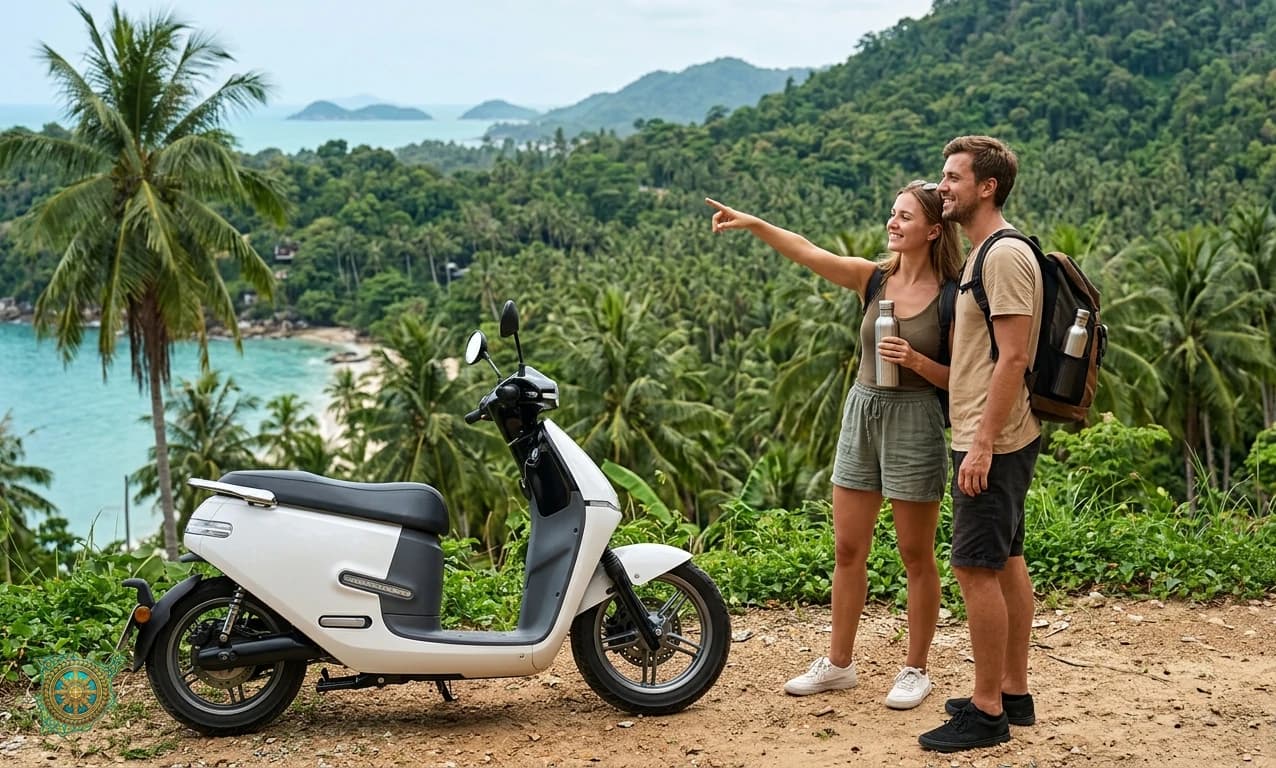
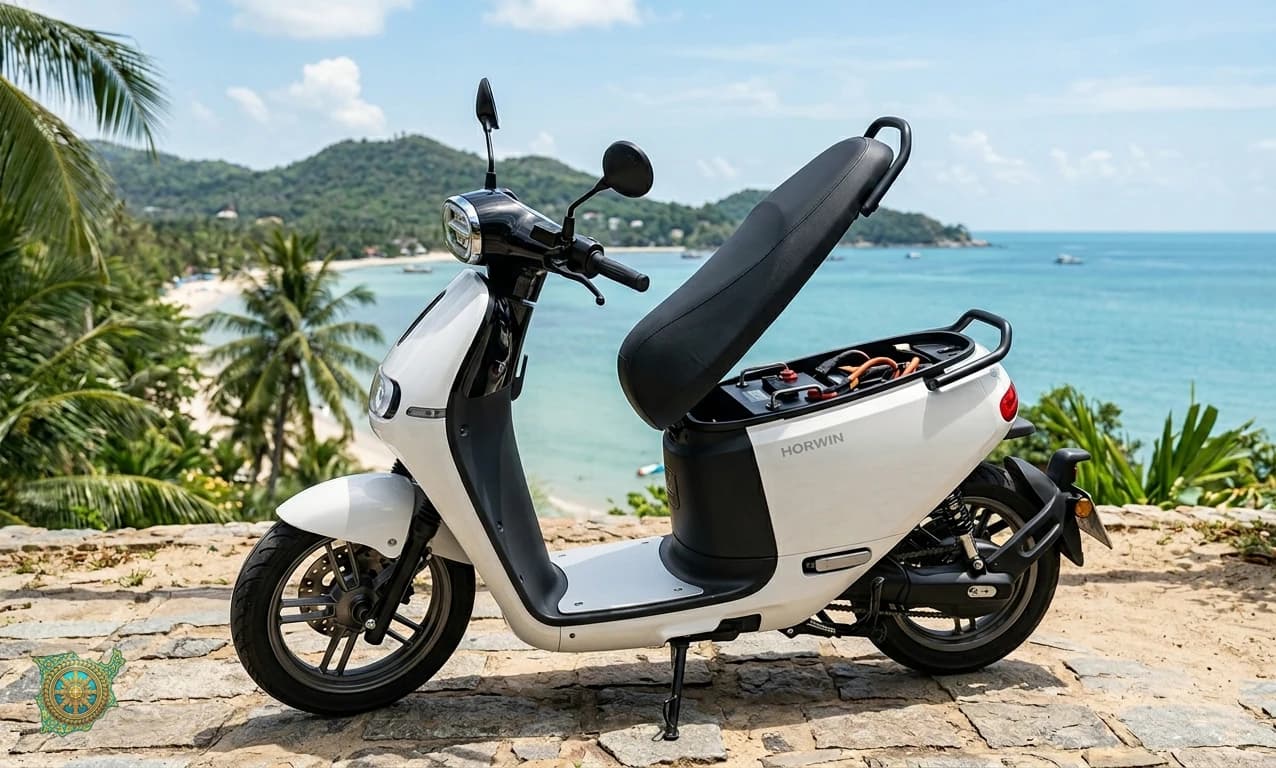
Five years of riding the Horwin EK3 on Koh Samui routes - including reef corridors, eco-resort areas, and wildlife-adjacent tracks - has reinforced a consistent conclusion: the EK3 is the most ecologically responsible rental scooter available on the island for beach corridor use. The dual battery gives it enough range to cover all standard Samui circuits; the zero-emission drivetrain makes those circuits consistent with the island's environmental sensitivity. For a traveller who takes the ecological context of Samui seriously, the EK3 is the clearest expression of that in the rental fleet.
Interested in renting Horwin EK3?
Check live availability and pricing for the Horwin EK3 on Koh Samui.
Show availableFirst-hand Horwin EK3 guides from our local team - where to ride it, when, and how to get the most from it on Koh Samui.

Browse the fleet, check availability, and contact us directly from your phone. Free on iOS and Android.
First-hand road and trail guides written by our local team - where to go, when to ride, and what to watch out for.