Spanish · 5 years on Samui
Spanish cycling enthusiast and eco-travel advocate on Koh Samui for 5 years. Carlos covers all bicycle and e-scooter content with a focus on sustainable exploration.
Updated: May 2026
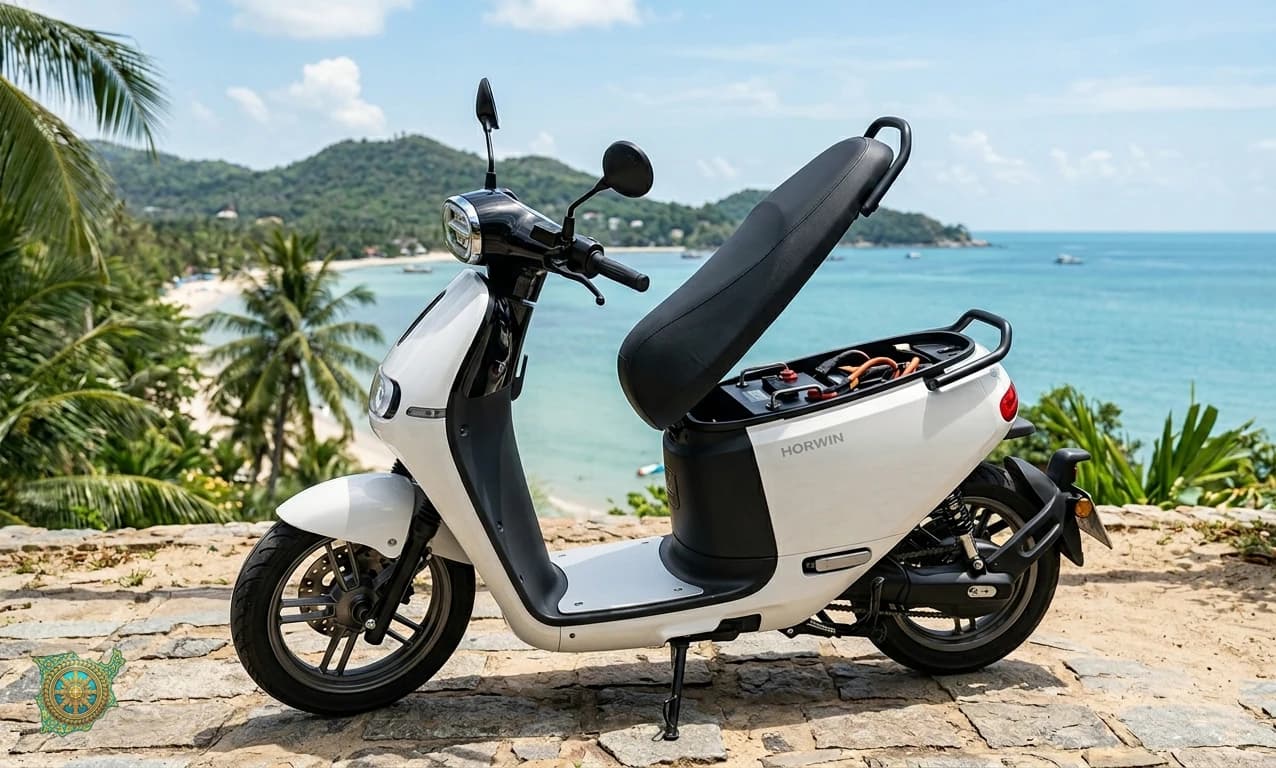
Parking the EK3 on the Chaweng beach road last October at noon in direct sun - 35 degrees Celsius ambient, tarmac surface temperature considerably higher - I returned after 90 minutes to find the battery housing warm to the touch. Battery temperature was 41 degrees Celsius according to the diagnostic display. After moving the EK3 to a shaded car park access lane and waiting 20 minutes, the housing had cooled to 34 degrees. Hot battery packs charge less efficiently and discharge more quickly. On Samui in the hot season, shade parking is not comfort - it is a battery management decision.
Charging the EK3 overnight at the Mae Nam guesthouse last February - ambient temperature 26 degrees Celsius at 10 p.m. - the dual batteries reached 100 per cent in 5 hours 45 minutes. On the same guesthouse socket in the afternoon heat at 34 degrees ambient, the charge from 20 per cent to 100 per cent took 6 hours 20 minutes. The EK3's battery management system reduces charge rate at elevated temperatures to protect cell health. Evening charging, after the day's heat dissipates, consistently produces faster charge times and better long-cycle battery preservation.
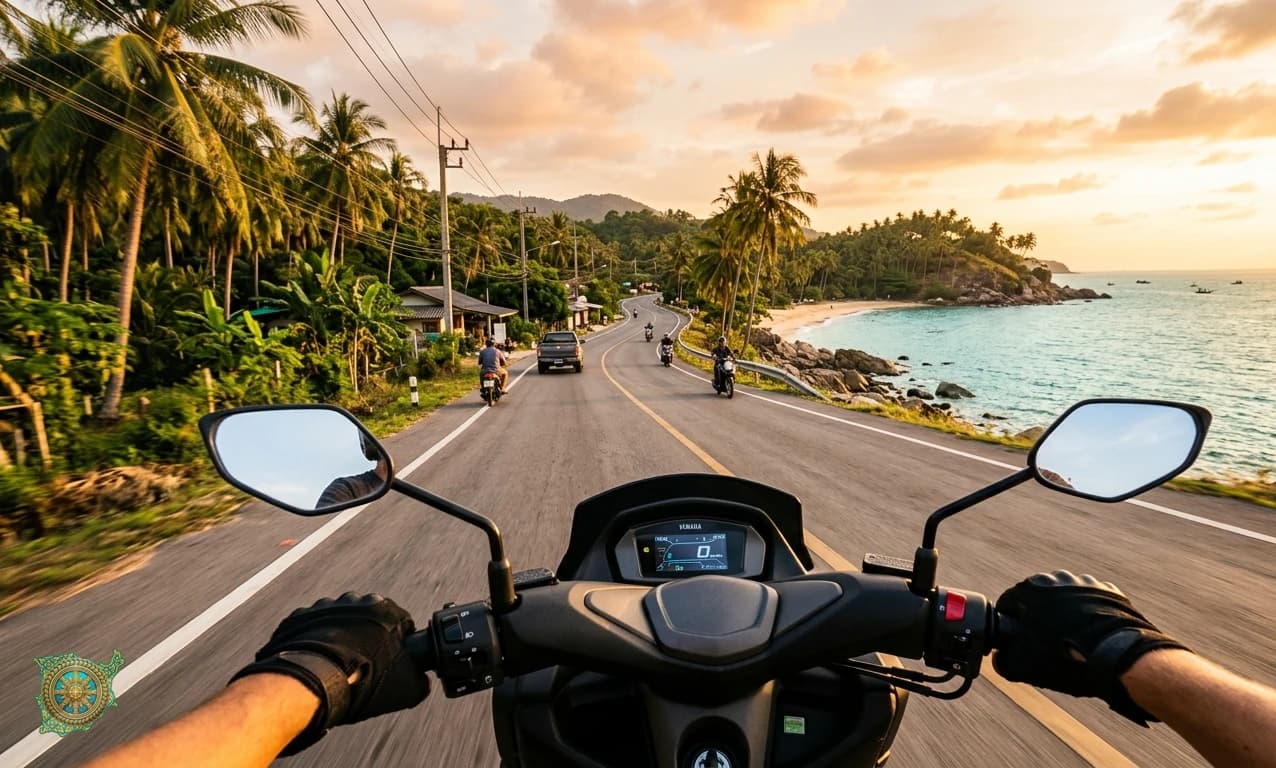
Riding the EK3 in Samui's wet season last October - 31 degrees Celsius, 85 per cent humidity - I measured consumption at 55 km/h versus 45 km/h on the coastal flat. At 55 km/h: 1.1 per cent of combined battery per kilometre. At 45 km/h: 0.88 per cent per kilometre. The 20 per cent consumption difference at the lower speed is more pronounced in hot, humid conditions because the motor generates additional heat above 50 km/h, triggering the battery management system's thermal protection. Riding at 45 to 50 km/h in the wet season extends range and protects long-term battery health.
Descending the coastal hill above Choeng Mon on the EK3 last November - approximately 3.5 per cent gradient, 2.2 kilometres - I measured 3 per cent battery recovery through regenerative braking. The EK3's regenerative system is active in all riding modes and works most effectively on sustained gradients of 15 seconds or more. On Samui's short but frequent coastal hills - common on the north coast road - each descent contributes 1 to 3 per cent battery recovery. Over a full day of coastal riding with multiple hill sections, regenerative recovery accounts for approximately 8 to 12 per cent of daily consumption.
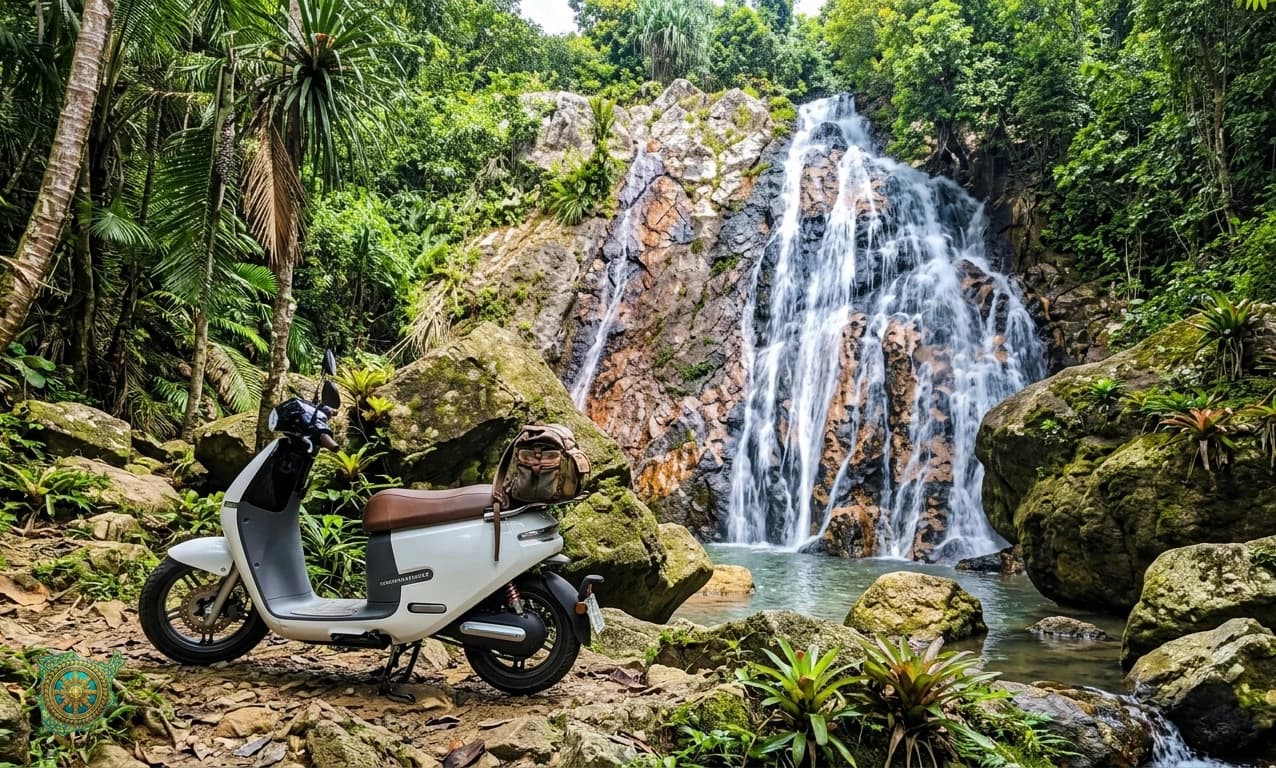
Riding the EK3 through the extended wet season last October - six consecutive days with at least one significant rain period - I inspected the battery housing connectors after each wet day. The EK3's battery compartment has sealed connectors; no water ingress was evident across six rain days. I did not charge within 30 minutes of a heavy rain ride, allowing the surface to dry before connecting. On returning to the guesthouse, I wiped the charging port and battery housing before plugging in. These habits add 3 minutes to the post-ride routine and are adequate precautions in Samui's wet season.
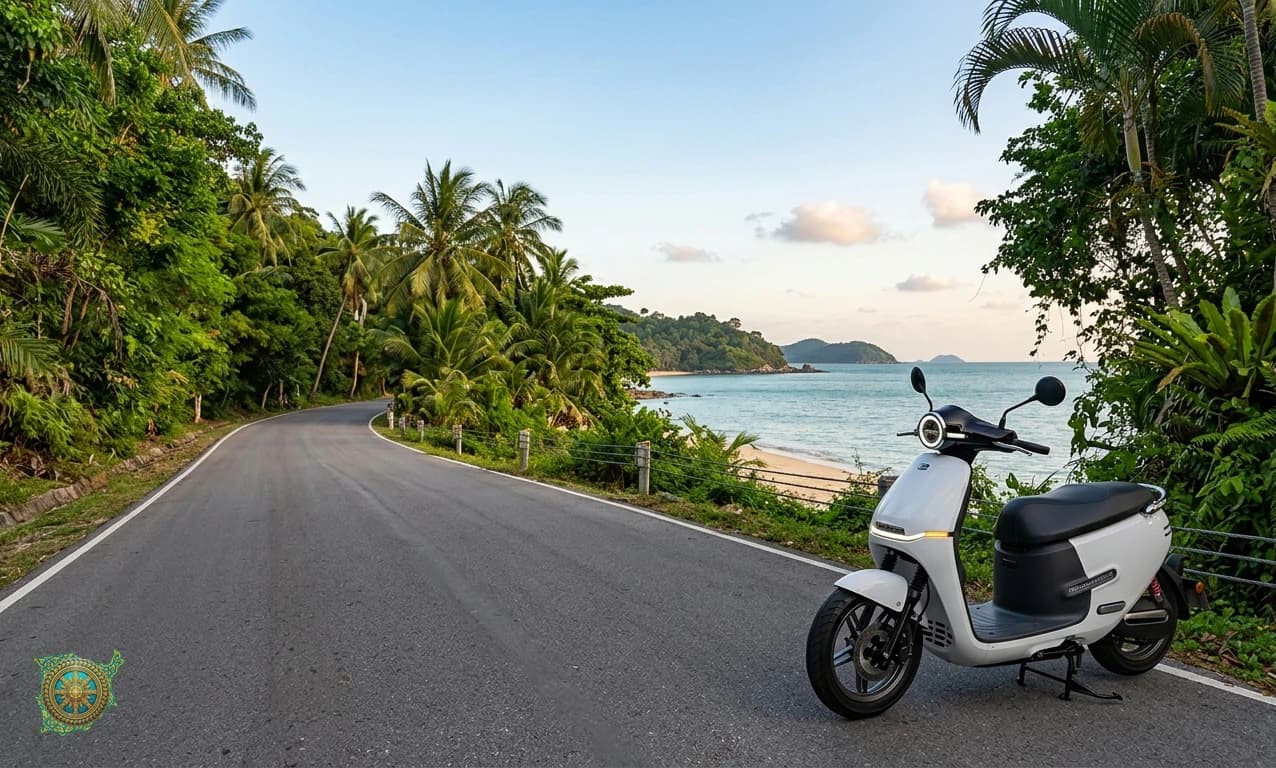
Five years of riding the Horwin EK3 on Koh Samui - across hot seasons, wet seasons, and the humid transition months - has produced a consistent battery management approach: charge overnight in cool conditions, park in shade during the day, ride at 45 to 50 km/h on extended circuits to preserve range, and wipe the charging port dry after rain. These four habits add minimal time to the daily routine and consistently return the EK3 to full charge in the shortest possible time, with range performance that matches the dual battery's specification across the full rental period.
Interested in renting Horwin EK3?
Check live availability and pricing for the Horwin EK3 on Koh Samui.
Show availableFirst-hand Horwin EK3 guides from our local team - where to ride it, when, and how to get the most from it on Koh Samui.

Browse the fleet, check availability, and contact us directly from your phone. Free on iOS and Android.
First-hand road and trail guides written by our local team - where to go, when to ride, and what to watch out for.