Spanish · 5 years on Samui
Spanish cycling enthusiast and eco-travel advocate on Koh Samui for 5 years. Carlos covers all bicycle and e-scooter content with a focus on sustainable exploration.
Updated: May 2026
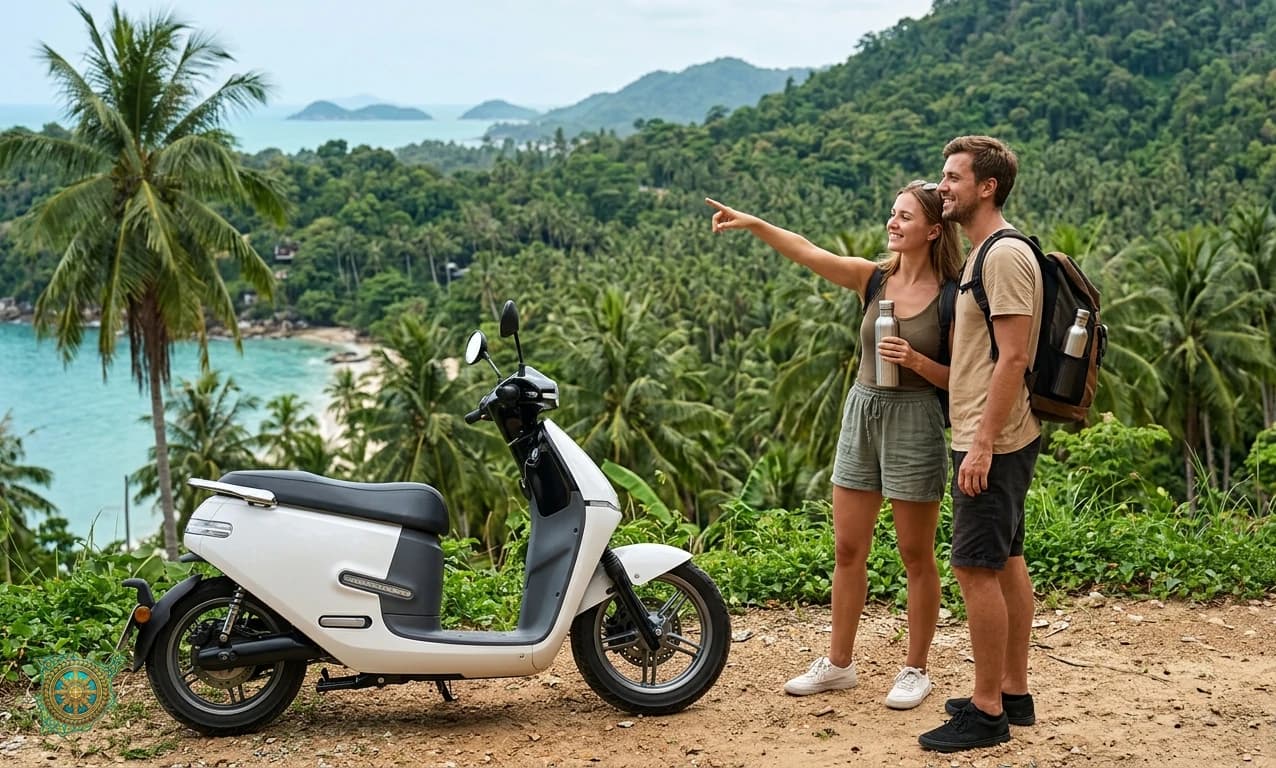
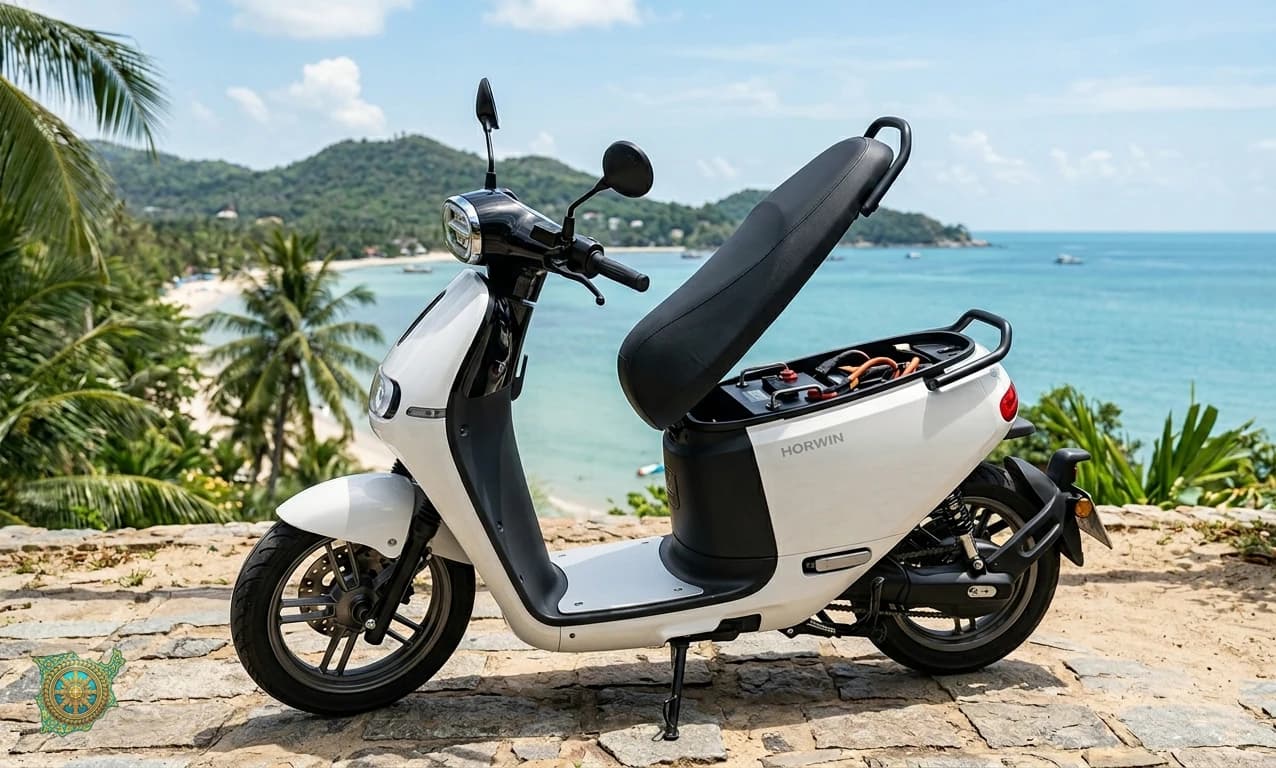
Planning a full ring road circuit last October - 52 kilometres, no planned stops - I chose the EK3 over the petrol options specifically because the dual battery made the range calculation trivial. A Honda Click 125 would complete the same circuit without concern. But the EK3 completed it with 35 per cent battery remaining, cost approximately 20 baht in electricity, and arrived at every location without the engine sound, exhaust smell, or warm-motor vibration that follows a petrol scooter into beach parks and guesthouse courtyards.
Staying at a boutique guesthouse in the Fisherman's Village area last February, I departed at 6:30 a.m. on the EK3 - the guesthouse's other guests were still sleeping. On a petrol scooter, starting the engine in the courtyard at that hour would have triggered immediate noise complaints. The EK3 rolled out silently. On Samui's quieter north coast, where boutique resorts are close to the road and parking is often within earshot of sleeping guests, the EK3's silence is not a minor feature - it is a daily practical advantage over petrol.
Over a ten-day rental last November I tracked running costs: EK3 electricity averaged 22 baht per charge at guesthouse rates, covering approximately 75 kilometres per full twin-charge. A Honda PCX 150 covering the same daily distances used 1.6 litres per day at current Samui petrol prices - approximately 64 baht. Over ten days the EK3 cost 220 baht in electricity; the petrol scooter equivalent cost 640 baht. The EK3's running cost advantage becomes increasingly significant over week-long and longer rentals.
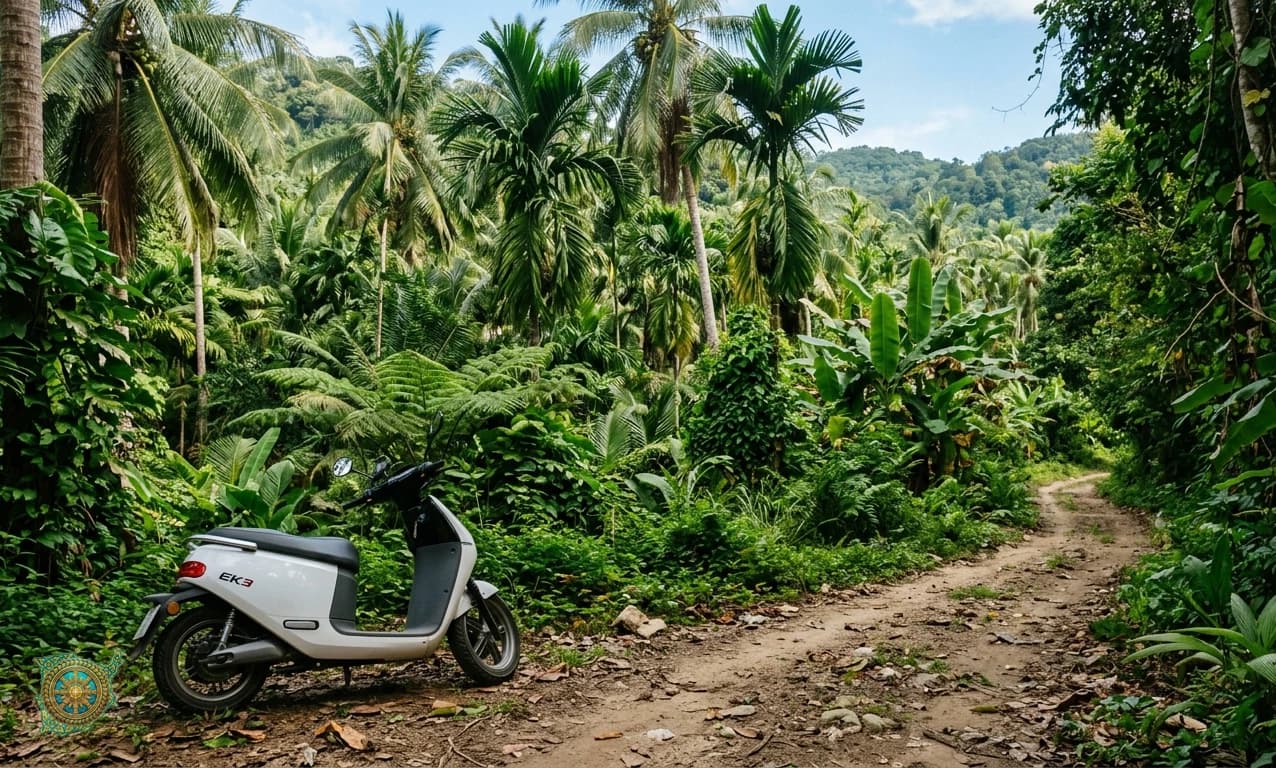
Attempting the mountain road above Nathon last March on the EK3 - 8 per cent gradient, rough tarmac - I turned around at the first switchback with 24 per cent battery used in 4 kilometres. A petrol scooter would have continued without concern and refuelled at the summit village's petrol vendor. The EK3's dual battery extends beach corridor range decisively, but against Samui's mountain climbs and plantation roads, the petrol scooter's refuelling flexibility remains unchallenged. The EK3 is an island beach scooter, not a mountain tourer.
At the Mae Nam morning market last February I arrived on the EK3 at 6:00 a.m. - the market opens as the fishing boats come in, and parking is on the beach edge path. Three petrol scooters idling in the parking area filled the beach path with engine exhaust within minutes. The EK3 parked and silenced completely. For a tourist who plans early market runs, sunrise beach access, or departure before a guesthouse's noise curfew ends, the EK3's zero-emission, zero-noise operation changes the practical experience of those moments.
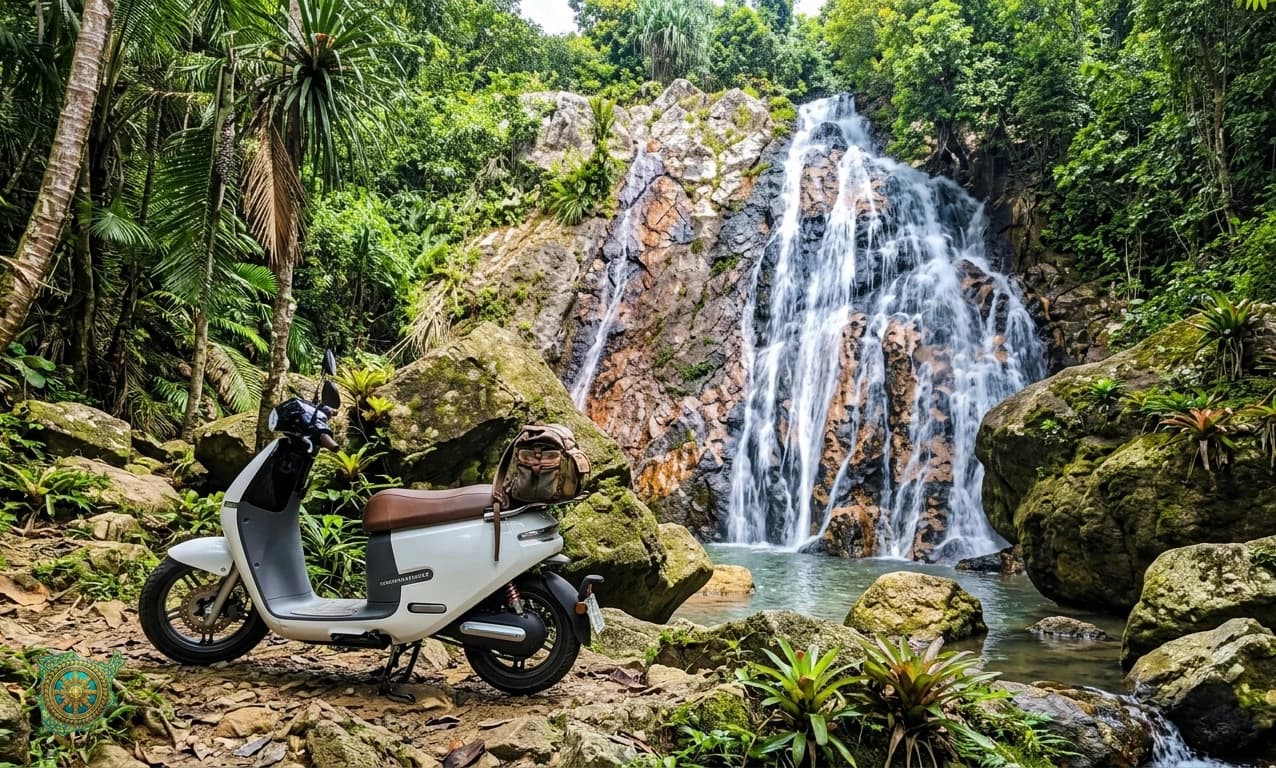
Five years of riding both the Horwin EK3 and petrol scooters on Koh Samui has produced a consistent answer to when the EK3 wins: all beach corridor riding below 65 kilometres, resort areas where noise matters, week-long rentals where running cost accumulates, and any day that begins or ends at a quiet guesthouse. The petrol scooter wins on mountain circuits, plantation roads, and any multi-day circuit where the charging infrastructure is uncertain. Within the beach corridor that covers most Samui tourist riding, the EK3 is the stronger choice.
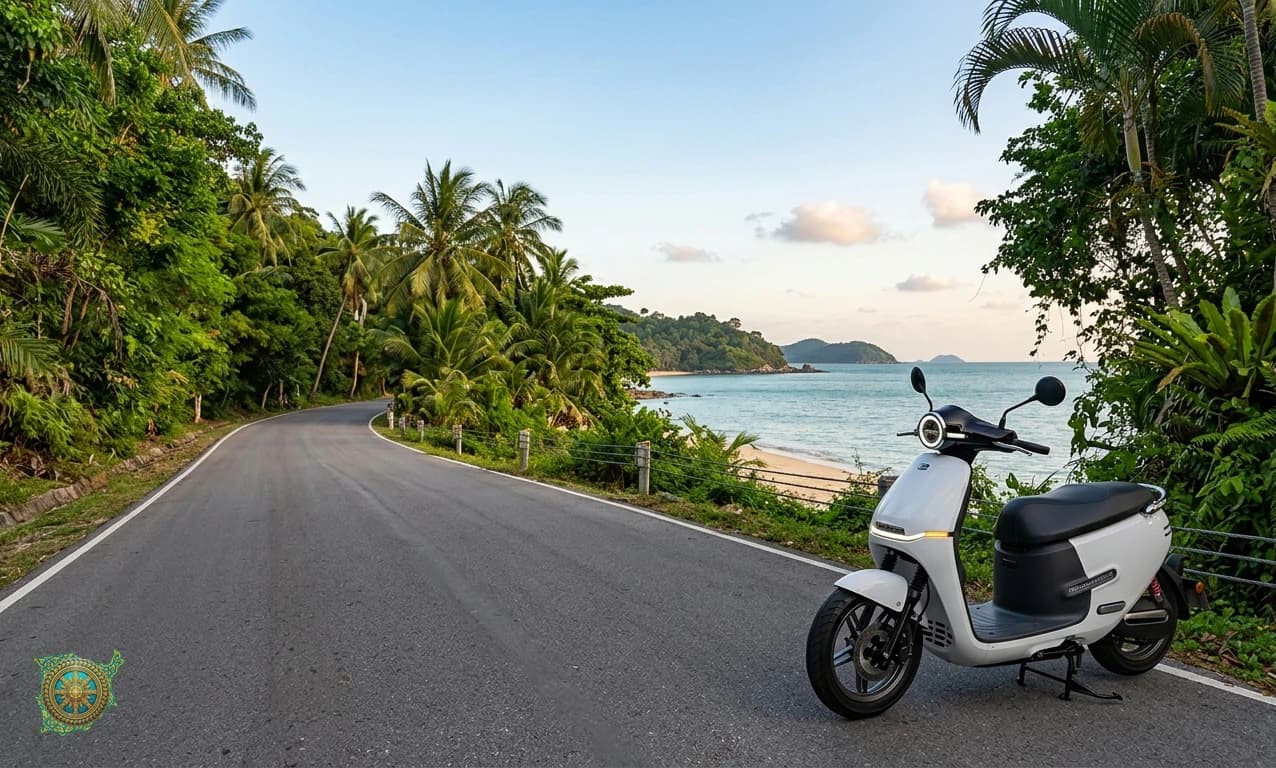
Interested in renting Horwin EK3?
Check live availability and pricing for the Horwin EK3 on Koh Samui.
Show availableFirst-hand Horwin EK3 guides from our local team - where to ride it, when, and how to get the most from it on Koh Samui.

Browse the fleet, check availability, and contact us directly from your phone. Free on iOS and Android.
First-hand road and trail guides written by our local team - where to go, when to ride, and what to watch out for.