Spanish · 5 years on Samui
Spanish cycling enthusiast and eco-travel advocate on Koh Samui for 5 years. Carlos covers all bicycle and e-scooter content with a focus on sustainable exploration.
Updated: May 2026
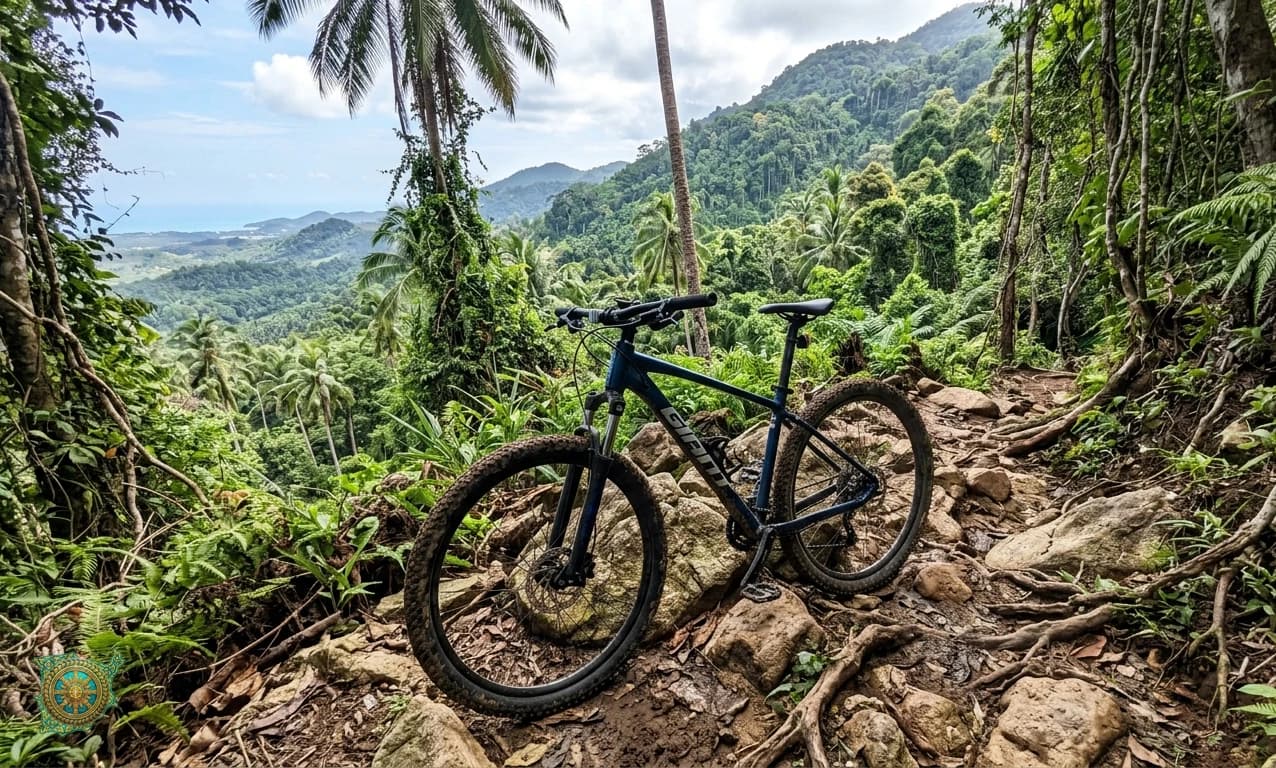
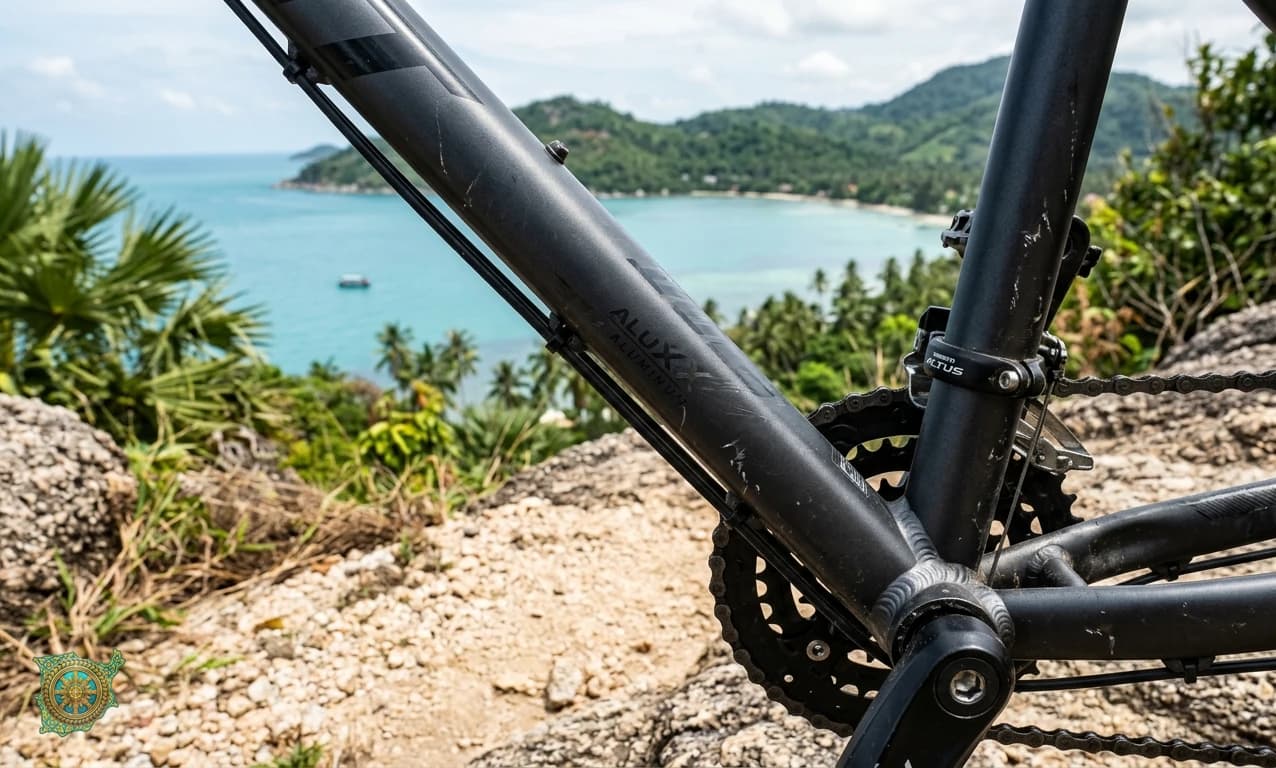
Explaining the Giant Talon 3's gearing system to a rider at the Chaweng shop last November - a Dutch traveller who had not used a derailleur bicycle before - I started with the basic principle: three chainrings at the front (left shifter), seven sprockets at the rear (right shifter), 21 combinations total. For Samui's riding, the left shifter moves between three positions and the right shifter handles seven. Most ring road riding uses the middle front chainring with the rear sprockets adjusted for gradient. The small front chainring is reserved for the steepest climbs; the large chainring for fast flat sections.
Approaching the Nathon ring road climb last January on the Giant Talon 3 - the gradient beginning at approximately 4 per cent before steepening to 8 - I shifted to the middle front chainring and the largest rear sprocket before the gradient increased. Shifting under heavy pedal load risks chain drop or missed shifts on the Tourney drivetrain; anticipating the climb and shifting while still on the flat preserves the shift quality and the chain's alignment. On the Nathon climb at 8 per cent gradient, the Talon's lowest gear combination produces a sustainable cadence of 70 to 80 rpm at 9 km/h - enough to climb without dismounting at moderate fitness.
Demonstrating gear selection on the mountain pass above Nathon last February to a group of four riders on Giant Talon 3s - the steepest section of the ring road circuit - I showed the difference between spinning at high cadence in low gear and grinding at low cadence in high gear. Spinning (90+ rpm in low gear) is more efficient and causes less muscle fatigue over a long ride; grinding (50 rpm in a gear too large for the gradient) fatigues the knees and legs faster. On Samui's climbs, the correct gear is the one that keeps cadence above 70 rpm. Most inexperienced riders instinctively use too large a gear.
Cresting the mountain pass last March on the Giant Talon 3 - beginning the 3-kilometre descent toward the south coast - I shifted progressively up through the gears as speed built, using the descent to recover before the flat south coast road required pedalling again. Descents on the Talon's Tourney drivetrain shift cleanly when the chain is under light load; shifting while braking allows smooth transitions. By the base of the descent, I was in the middle front chainring and a mid-range rear sprocket - ready for the flat south coast road without a standing start adjustment. Pre-positioning the gears on descents saves effort at the transition.
Five years of teaching riders how to use the Giant Talon 3's gearing on Koh Samui's climbs has produced one consistent observation: most riders start in too large a gear and suffer for it on the Nathon climb. The Talon's 21-speed system provides exactly the right low-gear range for Samui's steepest gradients - enough to climb comfortably at moderate fitness without dismounting - but only if the rider selects it before the gradient demands it. Riders who learn to shift early and maintain cadence complete the ring road without the knee fatigue that defines the experience for riders who gear incorrectly.

Interested in renting Giant Talon 3?
Check live availability and pricing for the Giant Talon 3 on Koh Samui.
Show availableFirst-hand Giant Talon 3 guides from our local team - where to ride it, when, and how to get the most from it on Koh Samui.

Browse the fleet, check availability, and contact us directly from your phone. Free on iOS and Android.
First-hand road and trail guides written by our local team - where to go, when to ride, and what to watch out for.