
French · 7 years on Samui
French motorcycle tour guide living on Koh Samui for 7 years. Marc leads group rides across southern Thailand and knows every road on the island.
Updated: May 2026
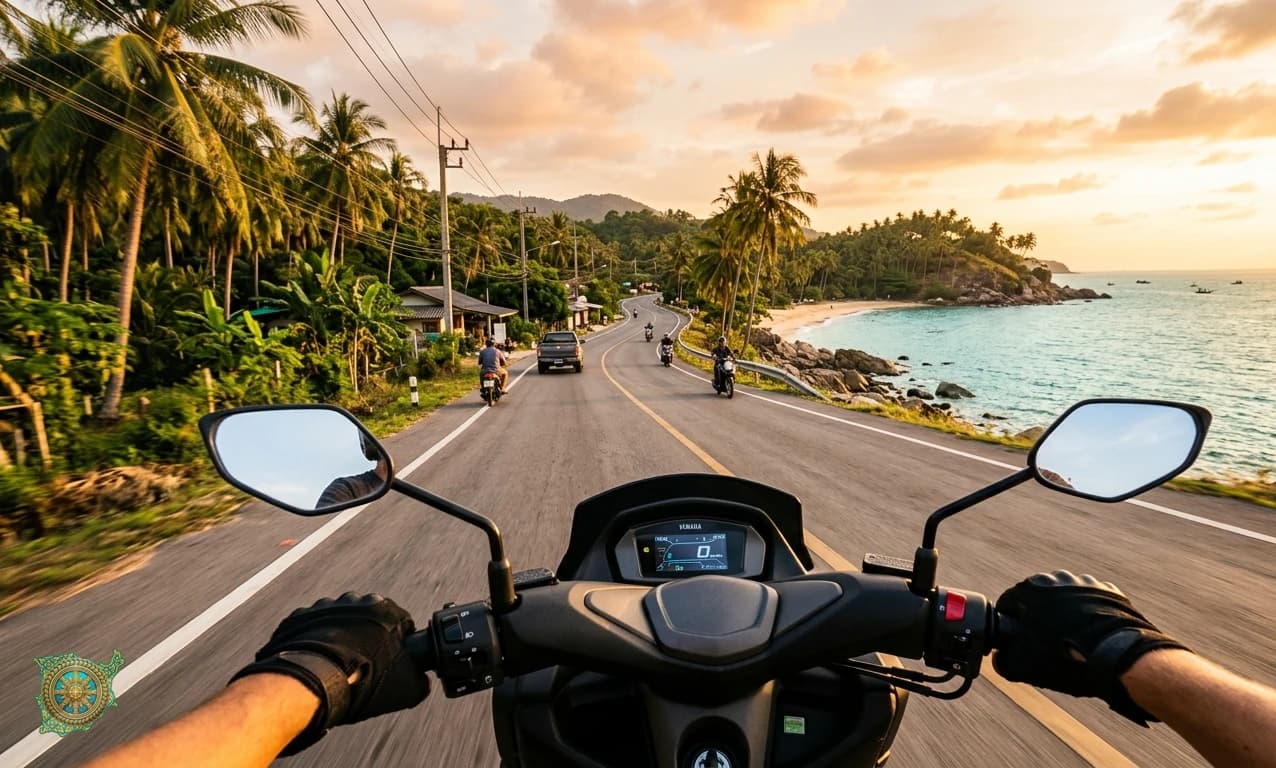
On the 14-kilometre straight between the Nathon junction and Ban Bangrak last January, I held the XMAX 300 at 90 km/h for the full distance without lifting. Engine note: calm. Handlebar vibration: absent. The CVT settled into its highest ratio inside the first kilometre and made no further mechanical noise above the wind. At 90 km/h the XMAX is not working - it is cruising. That distinction matters on a 90-kilometre day: a scooter at its ceiling for two hours costs the rider differently than one operating within a comfortable range.
On the Chaweng-to-Lamai road last October, a delivery moto stopped across two lanes without signalling at the roundabout south of Central Festival mall. I applied both brakes hard from 80 km/h. The XMAX's dual-channel ABS engaged simultaneously front and rear - the pulsing through both levers was brief and decisive - and the bike stopped in a straight line inside 22 metres. The dual-channel configuration is the meaningful ABS upgrade over the NMAX's single-channel system: rear stability at high speed changes the stopping geometry.
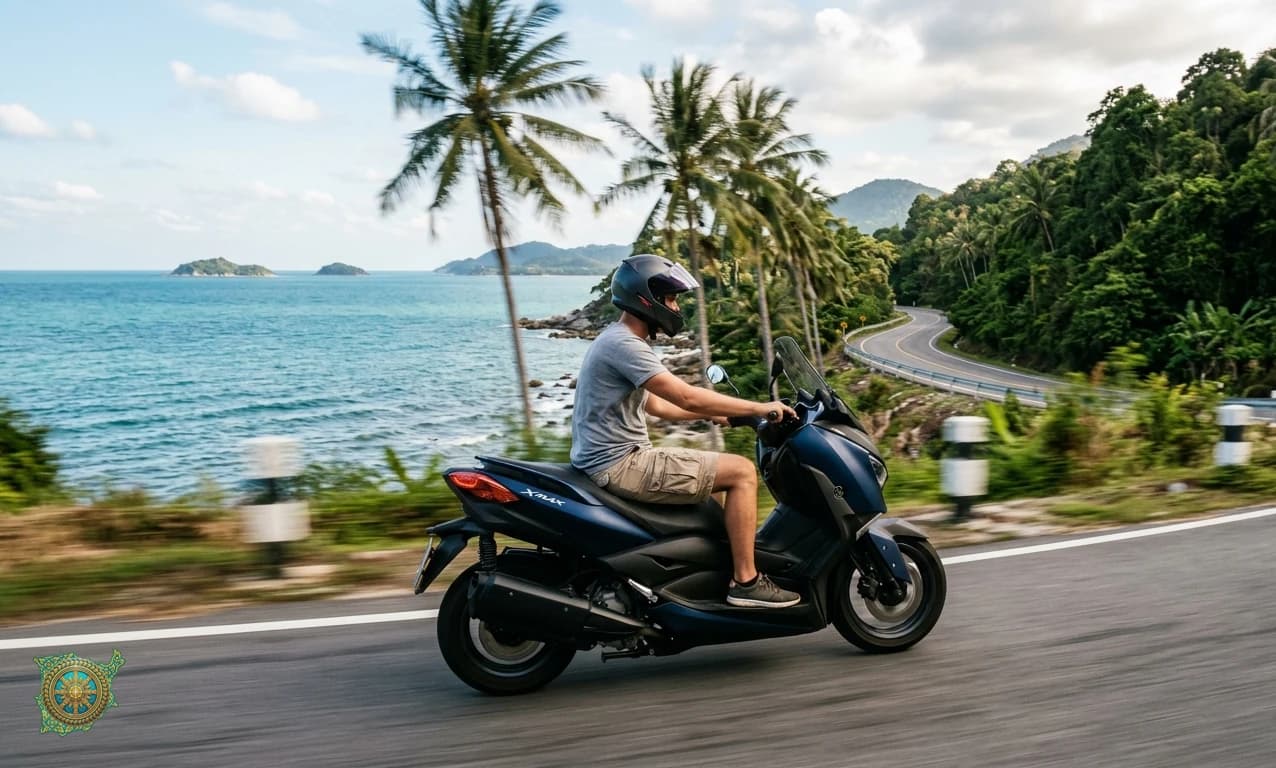
On the west coast road at 85 km/h last February, riding north from the southern tip junction toward Nathon, the XMAX's taller windscreen deflected the Gulf headwind to just above helmet level. Without it, the same headwind at that speed produces continuous upper-body resistance that compounds over 40 kilometres. I tested the comparison by deliberately sitting taller than the screen for 2 kilometres and then returning to the protected riding position. The energy difference over a full coastal section is not subtle at all.
Taking the tight right-hand bend above the first viewpoint on the Nathon mountain road last March at 45 km/h on the XMAX, the wider handlebar and longer wheelbase produced a different cornering geometry than the NMAX on the same bend. The XMAX requires earlier brake application and a wider entry line through the apex. It is not a compromise - it is a different technique. Riders coming from motorbike backgrounds find the XMAX's cornering natural; riders from 125cc scooters need a half-day of recalibration.
Last April across three consecutive days of ring road riding at 80 to 90 km/h average, I measured the XMAX's fuel consumption: 31 to 33 km/l. The 12-litre tank produced between 370 and 395 kilometres of range before reserve. For reference, the NMAX 155 returns 36 to 38 km/l at 70 to 80 km/h - better efficiency but on a 6.6-litre tank limiting range to 240 kilometres. The XMAX trades 10 per cent fuel efficiency for 60 per cent more range. On a day above 100 kilometres, that trade is automatic.
Seven years of sustained ring road riding on Koh Samui has produced a clear handling verdict for the XMAX 300: it is the most composed scooter in the rental fleet above 80 km/h, and it maintains that composure over 90-kilometre days without requiring the rider to manage fatigue through technique. The dual-channel ABS, the windscreen, and the suspension calibrated for touring weight make speed feel controlled rather than provisional. On Samui's roads, the XMAX earns its premium at exactly the speeds the ring road invites.

Interested in renting Yamaha XMAX 300?
Check live availability and pricing for the Yamaha XMAX 300 on Koh Samui.
Show availableFirst-hand Yamaha XMAX 300 guides from our local team - where to ride it, when, and how to get the most from it on Koh Samui.

Browse the fleet, check availability, and contact us directly from your phone. Free on iOS and Android.
First-hand road and trail guides written by our local team - where to go, when to ride, and what to watch out for.